
What the Leaves Know
A few days spent observing the forest reveal enduring lessons about how living systems grow, adapt, and flourish together.

There is something about the scenery on Minnesota’s North Shore that slows my attention in the best possible way. Even though it is only a few hundred miles from my home, the seasons unfold differently here. The forest lingers just a little longer in each stage, and that slower rhythm makes it easier to notice what is usually overlooked.
I wrote this as I was sitting on the back deck of my cabin, watching the trees.
At that time, the leaves were still young. They had moved beyond tightly closed buds but had not yet reached the full canopy of summer. Their fresh green color glowed against the darker trunks, and because the branches were not yet completely filled, light continued to filter through the forest. There was more sky visible between the trees, more space to notice the relationships among them.
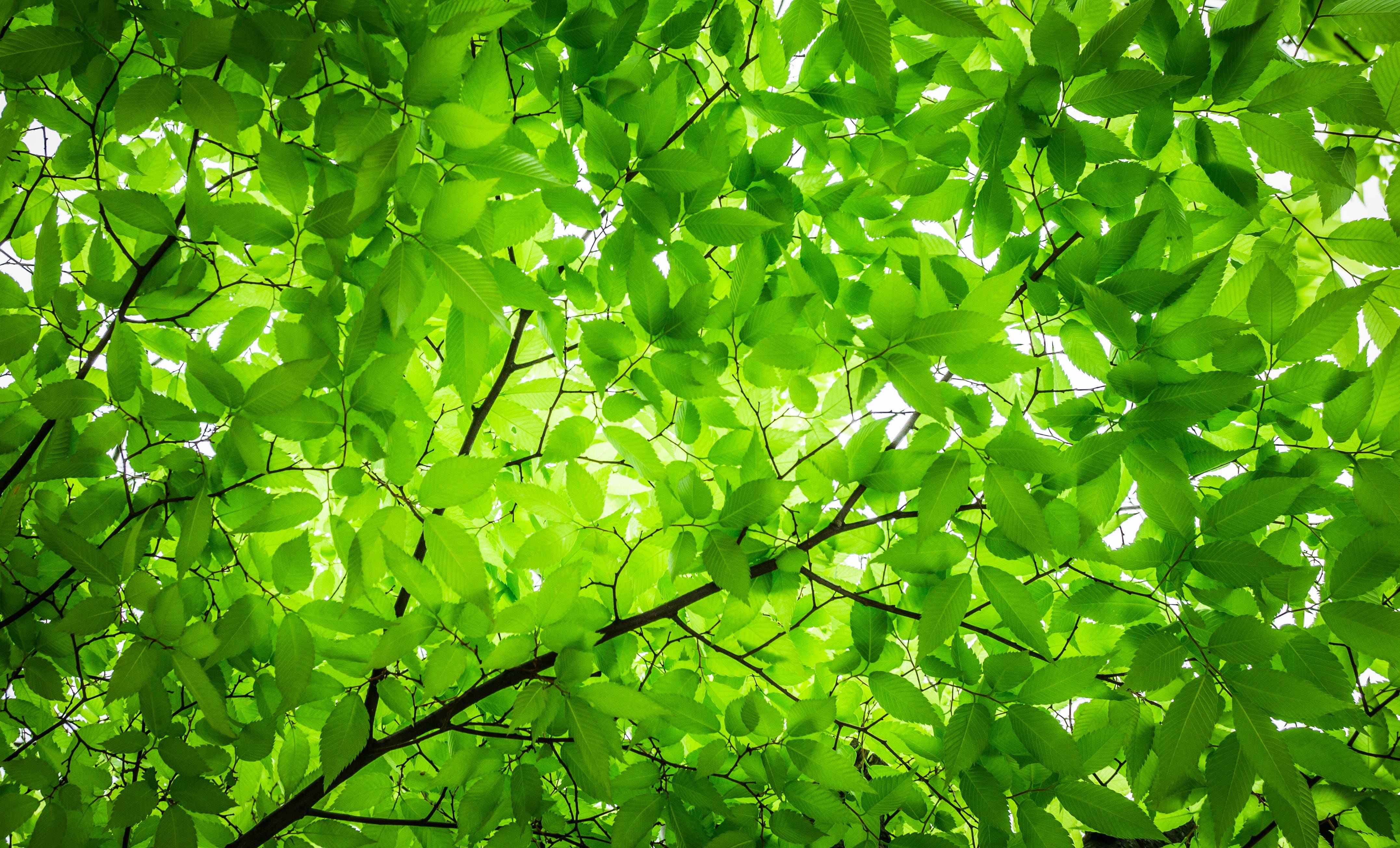
As I revisit these notes now, I know that forest has changed. The canopy has filled in, just as it always does. But the lessons those young leaves offered about growth, connection, and the unfolding of living systems remain just as relevant. Simply sitting and watching gradually led me beyond the beauty of the scene itself. The leaves became an invitation to think more deeply about the remarkable design of living systems.
Nature’s quiet reliability
The first thing that struck me was the quiet reliability of seasonal growth. Every spring and summer, deciduous trees begin again. New leaves emerge, branches lengthen, trunks widen almost imperceptibly, and forests continue their patient evolution. None of this happens dramatically. It happens steadily, season after season, year after year.
These recurring cycles remind us that order does not require rigid control. Nature creates stability through patterns that repeat while allowing every season to unfold a little differently than the last.
My second observation was even more profound. Although these leaves are still small, they are already carrying out one of the most important functions on Earth. Through photosynthesis, they transform sunlight into the energy that sustains nearly every form of life.
The sun shines everywhere. It shines on rocks, on water, and even on the surface of the moon. But without living organisms capable of receiving and transforming that energy, nothing further happens. It is the relationship between sunlight and living plants that creates abundance.
Nature’s partners
Leaves, sunlight, soil, fungi, insects, microorganisms, water, and air all participate in a vast network of reciprocal relationships. Life emerges not because one element is powerful enough on its own, but because each contributes something essential to the whole.
Organizations are not so different.
We often celebrate individual achievement, yet long-term success almost always grows out of healthy relationships, shared purpose, and collaboration across the entire system.
As I continued watching the trees, I noticed something else. The leaves themselves often seem to foreshadow the larger form of the tree they belong to. Aspen leaves echo the graceful vertical habit of the mature tree. Maple leaves spread outward much as the canopy eventually will. Even the branching pattern of a pine contains a miniature version of the structure of the entire tree.
Nature’s Patterns
Scientists describe them as fractals—forms that repeat across different levels of scale. We see them in coastlines, river systems, snowflakes, blood vessels, lightning, and forests. The same organizing principles appear again and again, creating coherence without requiring a central controller.
Living systems are remarkably good at generating order from within, which leads me to several broader ideas:
Growth unfolds through recurring cycles rather than straight lines.
Life depends on networks of mutually beneficial relationships.
Similar patterns appear across many different levels of scale.
Evolution is continuous, with each season building on the one before it.
Human Systems Myths
For generations, many of our management systems have been built on the assumption that stability comes from tighter control. We create more procedures, more approvals, more reporting structures, and more attempts to predict every possible outcome. Nature suggests another possibility.
Living systems are not chaotic because they lack control.
Living systems are orderly because they organize around purpose, relationships, feedback, and continual adaptation.
Individual organisms are constantly making local decisions while contributing to the health of the larger system.
Perhaps our organizations would become more resilient if we spent less energy trying to manage every individual action and more energy cultivating the conditions that allow people to organize themselves around a shared purpose. That requires trust, and patience. Like the forest outside my window, they unfold one small step at a time.
The leaves have been offering these quiet lessons all along. Perhaps all we need to do is stop long enough to notice.