
Growing Stronger Through Connection
How interdependence transforms organizations into thriving ecosystems

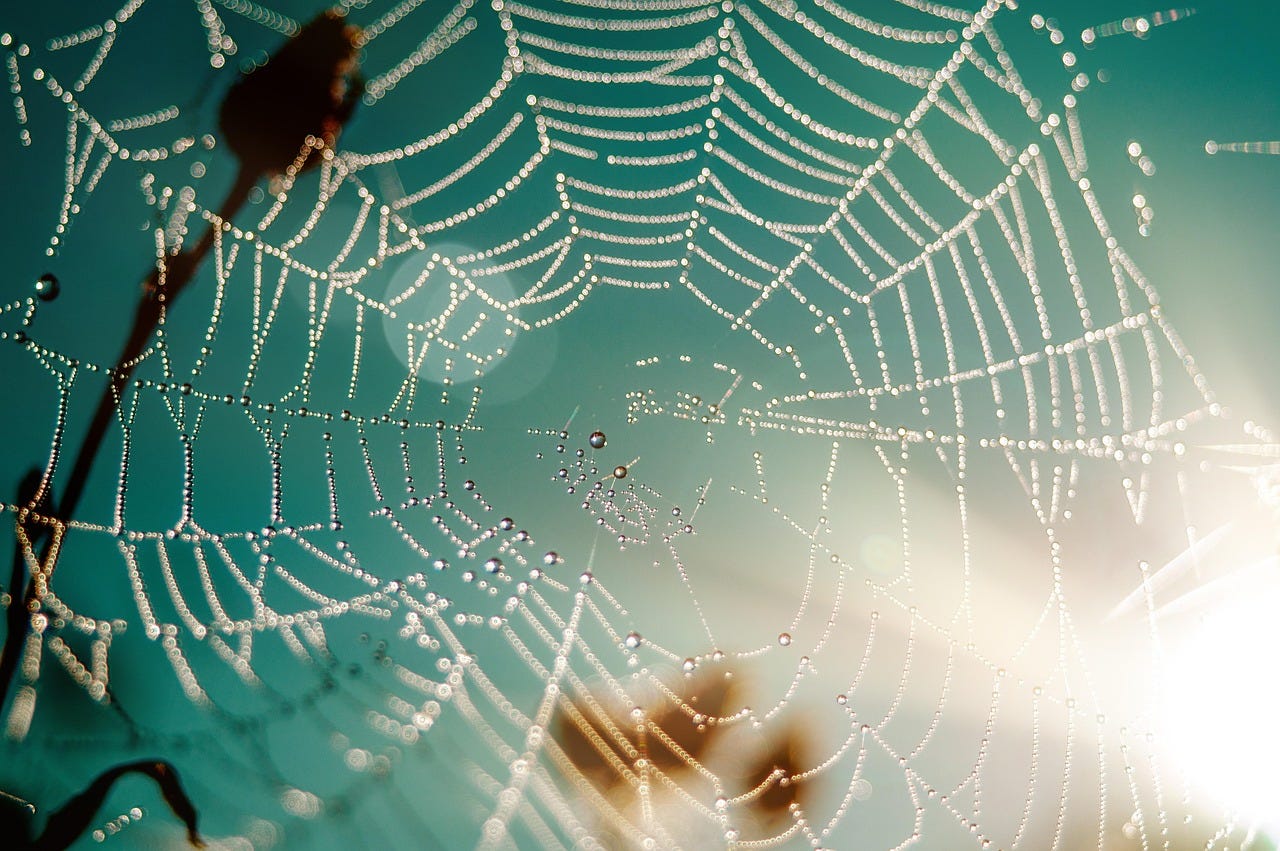
A spider’s web is a masterpiece of interdependence. When a fly touches one strand, the vibration travels instantly through the entire structure. The web doesn’t break or weaken. It responds.
Each silk thread depends on every other thread for the web’s stability and function. Remove any connection and the whole system becomes vulnerable. Yet this interdependence isn’t a limitation. It’s what makes the web capable of capturing prey fifty times the spider’s weight. Nature designed this intricate structure as a source of strength, not constraint.
Our organizations are webs, too. But we often view these connections differently. Rather than thinking of interdependence as a capability, we carry misbeliefs that it’s complex, cumbersome, or needy. Relationships seem like limitations rather than liberation. So we work around our organizational connections instead of working with them.
The Network Nature Intended
In Nature, nothing exists in isolation. Consider the intricate communication systems within a beehive, where thousands of individual bees coordinate seamlessly through chemical signals and movement patterns. This coordination protects the hive and the queen, facilitates reproduction, and conducts the business of daily life. Bees demonstrate that interconnection is essential for survival and growth.
Traditional leadership treats interdependence as a challenge. We create organizational charts with clear lines of authority. We establish silos to maintain focus. We measure individual performance as if people operate in isolation, worrying that too much connection might slow decision-making or dilute accountability.
Nature shows us the opposite. Interdependence builds collective resilience, strengthens the whole system, and allows for responses that no individual component could achieve alone.
When we embrace interdependence rather than fight it, remarkable shifts happen in how we lead and how our organizations thrive.
The Ripple Effect of Trust
When leaders explore interdependence, they begin to see their organizations as living networks. Change in one area naturally influences others. That project delay in marketing doesn’t just affect the marketing team. It ripples through sales, customer service, and product development.
Rather than seeing this as problematic, interdependent leaders recognize it as valuable information flowing through the system.
This perspective invites us to look for the small changes that can optimize connections throughout our organizations. Like that single vibration traveling through the spider web, a shift in how one team communicates can strengthen the entire network. How one person approaches collaboration matters. The way one department shares information creates effects far beyond what we might imagine.
When we nurture these connections instead of controlling them, beautiful developments emerge:
Mutually beneficial relationships flourish naturally and integration replaces isolation.
People share information because they understand their role in the larger ecosystem, not because a policy mandates it.
Diversity of thought becomes a source of strength rather than a coordination challenge.
Softness Creates Strength
Perhaps the most profound lesson Nature offers about interdependence lies in what creates the strongest connections: trust, empathy, collaboration, and genuine care for collective well-being.
These qualities might seem soft, but they shape Nature’s most resilient systems.
The spider’s silk appears delicate, but it’s stronger than steel by weight. Similarly, organizations built on strong relational foundations can weather disruptions that would shatter more rigid structures. This requires a fundamental shift in how we understand strength in leadership.
Instead of commanding from separation, we learn to influence through connection. Instead of protecting individual territories, we recognize that everyone’s success contributes to our own. Instead of seeing others as competition for limited resources, we understand that the system’s health determines everyone’s ability to thrive.

How to Build Interdependence in Your Organization
I invite you to experiment with these approaches to working with rather than against your organization’s natural interdependence:
Map your connections: Notice the connections that already exist in your organization. Where do information, energy, and resources flow naturally? What relationships are thriving, and which ones need more attention?
Practice systems thinking: Before making changes, ask yourself: How might this decision ripple through other areas? Who else might be affected, and how can I invite their perspective into this process?
Nurture the soft skills: Invest time in building trust, empathy, and authentic communication. Ask: What would change if people felt genuinely safe to be vulnerable and collaborative here?
Celebrate relationship: Notice and acknowledge when interdependence creates positive outcomes. Where has collaboration led to innovation? When has someone’s willingness to help outside their role benefited the whole system?
Trust the system’s wisdom: When challenges arise, consider: How is the system trying to communicate with us? What might this disruption reveal about connections that need strengthening?
Connection Takes Courage
Embracing interdependence asks us to release the illusion of control. It requires stepping into a different kind of leadership courage—the willingness to be genuinely connected to our teams, our purpose, and our shared outcomes. Strengthening the relationships within our organizations also makes us part of something greater than we could ever be alone.
The spider trusts her web completely. She knows that each strand supports her ability to thrive. When we learn to trust the organizational webs we’re part of, we discover that interdependence isn’t a constraint on our leadership. It’s the foundation that makes sustainable success possible.
Nature is a Teacher for Today’s Leaders
To explore interdependence in our organizations further, I invite you to discover more about how Nature guides effective leadership in my books Leading From the Roots and Following Nature’s Compass. Learn more on my website.
Until next time,
Dr. Kathy Allen